Agents should compile the web, yet they are clicking it like madmen.
Agents should cross the web with as few tokens as possible and leave a fixed, token-free script behind. Four conventions that would get us there.

Nikita Bier is right that the next five years need a standard so agents can identify themselves, and a site can treat an agent differently from a person. The cat-and-mouse with bot detection in the next six months is a very temporary state.
Agent Identity would pave the way to effcient web use for agents. A browser harness that clicks is definitely not the answer. But is MCP and CLI? Today's MCP fails the same test, and so does a CLI the model has to figure out again on every run. Agents need to cross the web with as few tokens as possible, and then leave a fixed, token-free script for the path they and their subagents will walk again.

The state of the art is still a set of bad choices
At Blocks we are building on the best surfaces the industry has right now. An agent can be embedded with a script tag, pointed at a chosen model, given a knowledge base, and connected to tools over MCP or a normal API. It can run a fixed sequence, or it can reason on its own. Coding agents that build on Blocks do not rediscover the HTTP API: skills route them through the CLI and the SDK, and the result is application code.
That is the state of the art. It still forces the app builder into tradeoffs that feel nothing like a high-performance language.
Cheap model or capable model. RAG or a live tool. A rigid flow that you can audit, or an open loop that is fluffy and expensive. MCP, with a schema cost on every turn, or a custom API the agent may misuse. Retry the whole reasoning trace, or accept a wrong tool call. None of these choices compile. None of them have a type checker. The LLM makers still waste tokens left and right: file dumps, DOM snapshots, tool catalogs, and "let me think" tokens that never needed to be generated.
Jev is the right cut. The rail is still somewhere else.
Jev, the System One model TypeSafe shipped in September, is so far the clearest attack on that waste. It does not write. It takes a state plus a typed question and returns a choice, a score, or a probability, at $0.042 per million input tokens and no charge for the output, in roughly 100 milliseconds. Routing, gating, and "is this enough context?" are exactly the calls a frontier model should not be billing. Early benchmarks put it close to frontier models on these narrow decisions, and far cheaper.
The uncertainty stays. A small classifier with a handful of labels already beats Jev on some routing sets. The token cost gets smaller but it stays above zero, and someone still has to decide what the probability means and whetehr or not to take the exit route.
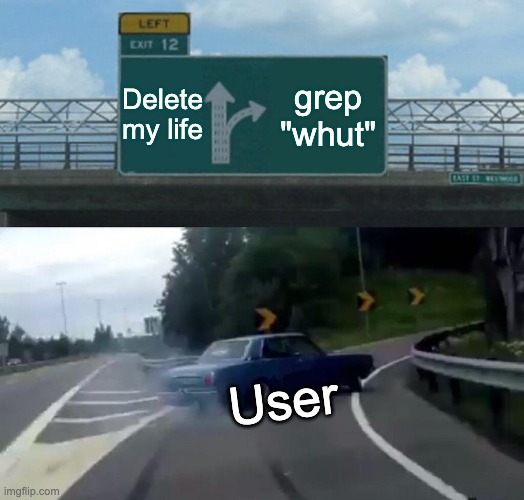
The rails worth agreeing on
Four conventions would do more than another harness.
An agent identity a site can trust, which is Bier's point, so detection can stop. Early sketches exist, including auth.md and ERC-8004. None of them is the standard.
A declared action surface, WebMCP or something equivalent, so the agent calls searchFlights instead of hunting a button.
A decision layer for route, gate, and score, Jev or whatever replaces it, with the generative model reserved for text and code.
A compile step with a payback rule: explore once, emit a typed script, replay it for free, and spend tokens only on the diff.
Until these rails are generally accepted, Blocks will keep shipping the current best kit, and our builders will keep choosing between unnice options. The language we actually want is efficiency, predictability and speed.
Julian Weber
CEO, SELISE Group
Julian Weber is the CEO of SELISE Group, where he has worked for more than 14 years. Based in Zürich and a graduate of the University of St.